Skip to content

Fabien

Batman by James Tynion Reading Order

  • by

After a divisive 85-issue run on the main Batman comics, Tom King stopped writing the series and James Tynion IV took over the book. Initially, it was announced it was just there to take the series to its 100 issues. Plans changed.

Finally, Tynion stayed, until he surprised everybody when he revealed he was leaving Batman for writing newly created-owned (non-DC) titles. His run on the Batman comics was not without events and, even if it’s not the longest, you may need a few pointers.

But first, here is the official synopsis of the story when James Tynion IV started writing the Batman series: It’s a new day in Gotham. Bane has been vanquished, but both the city and its champion are still struggling to pick up the pieces. Deathstroke, the world’s greatest mercenary, is back in town under a new contract. Soon other hired killers follow, and Batman is surrounded by assassins—as well as Gotham’s own dangerous players, from the Riddler to the Penguin to Harley Quinn.

As the Caped Crusader draws closer to uncovering the figure pulling the strings, the love of his life, Catwoman, holds the sinister secret in her claws. Can Batman pry it from her without tearing their relationship apart? And will it be enough to stop the coming plot against him?

Like a lot of writers on Batman comics, James Tynion IV worked with a lot of established characters but also introduced some of his own creations like Punchline, Ghost-Maker, Clownhunter, and more. 

What to read before Batman by James Tynion?

First, James Tynion IV wrote Detective Comics at the beginning of the Batman Rebirth era–following the Batman Modern Age era and The Batman New 52 era. It’s not an obligatory read before going into his Batman comic book run, but if you are curious:

Being that James Tynion IV picked up where Tom King left off, even if it is sold as a “new start” that you can presumably read without prior knowledge, you may want to read the last King’s storyline: City of Bane.

Read More »Batman by James Tynion Reading Order

Hulk Reading Order (Peter David, Immortal Hulk, and more…)

  • by

In 1962, Marvel put an end to the title Teen-Age Romance after 86 issues. Its replacement was not romantic, it was The Incredible Hulk #1. It was obviously a comment on the arms race coming from Stan Lee and Jack Kirby, Scientist Bruce Banner created a g-bomb—“g” is for gamma!—and was not the one who wanted to test it as fast as possible (it was General “Thunderbolt” Ross), but it happened.

During the experimental detonation of a gamma bomb, the life of teenager Rick Jones was put in danger. Bruce Banner saved him but, by doing so, was hit by the blast resulting in the absorption of gamma radiation.

Banner didn’t die, but something changed in him. He became the Jekyll/Hyde of the Marvel Universe, two “men” in one body, transforming from the mild-mannered bespectacled physicist into the gray-skinned monster named “the Hulk” when he loses control.

Feeling guilty, Rick Jones stayed by his side, helping him to become a superhero. You can read a lot more about all that in our article about the story of the Hulk, his creation, and a lot more. And if you want to learn a bit more about The Hulk entourage, check out The Hulk Family Tree.

Read More »Hulk Reading Order (Peter David, Immortal Hulk, and more…)

Justice League International Reading Order, by Keith Giffen and J. M. DeMatteis

After what is known as the Justice League Detroit era (or the Detroit League), the crossovers event Crisis on Infinite Earths and Legends, came a new kind of Justice League team. Written by Keith Giffen and J. M. DeMatteis, with art by Kevin Maguire, the Justice League International (JLI) Comics was created in 1987. It was not a team of A-listers. As a matter of fact, it was considered as a joke and–with what they got to work with–Giffen and DeMatteis developed a sitcom-like version of the Justice League. One that is still quite unique to this day.

With most of the usual big Justice League characters unavailable, this new league introduced new characterizations to old characters like Guy Gardner (Green Lantern) and Booster Gold, but also a major new character named Maxwell Lord who was behind the creation of this new league. They fight alongside (and with) Batman, The Black Canary, The Blue Beetle, Captain Atom, Doctor Fate, Doctor Light, The Martian Manhunter, Mister Miracle, Big Barda, Green Flame, Ice Maiden, Rocket Red, and more.

But here is the official synopsis from DC Comics: The world’s greatest super-team, the Justice League, are Earth’s greatest and last line of defense against all manner of world-threatening villains… assuming they don’t wipe each other out first! Find out what happens when Batman, Superman and the rest of the gang face a galactic invasion fleet known as the Cluster, exchange harsh words with crazed bounty hunter Lobo and track Mister Miracle back to the hell planet that is Apokolips, and then battle yet another invasion fleet…because that’s how they roll.

Read More »Justice League International Reading Order, by Keith Giffen and J. M. DeMatteis

Secret Invasion Reading Order, a Marvel Event

Secret Invasion Reading Order

The reign of Brian Michael Bendis continues, one event after another. This one was published from April through December 2008. After Avengers Disassembled (reading order), House of M (reading order), Decimation (reading order), and Civil War (reading order) comes Secret Invasion. A story about trust that broke the superhero community, already shaken by the events of the Civil War. Dark times are ahead!

Here is the official synopsis: It begins with a brutal battle between the New Avengers and the Hand—one that claims the life of Elektra and reveals that she was a Skrull! What does this mean for Tony Stark and his Mighty Avengers? How about the Illuminati? Soon, the whole Marvel Universe will be asking: who do you trust? As the Secret Invasion stands revealed and the Skrulls attack Earth, which heroes will be exposed as alien impostors? Can the Secret Warriors turn the tide? And can anyone stop the Skrull queen Veranke?!

What to read before Secret Invasion?

Even if the Bendis’ Events were connected (see reading order), Secret Invasion is more self-contained than the other. But it was planned. You can start with Civil War (reading order), then read The New Avengers and The Mighty Avengers.

Read More »Secret Invasion Reading Order, a Marvel Event

Crisis on Infinite Earths Reading Order, The First DC Comics Major Event Crossover

  • by

Published from April 1985 to March 1986, Crisis on Infinite Earths is the name of a 12-issue limited series written by Marv Wolfman and penciled by George Pérez at the heart of the major event of the same name. It’s the first universe redefining crossover comic book event ever, and it came from Wolfman’s desire to simplify and unify the DC Universe in order to help new (and old) readers to get a better understanding and reading experience. There’s a before and an after Crisis, and the industry as a whole changed after that.

Here is the official synopsis: A mysterious being known as the Anti-Monitor has begun a crusade across time to bring about the end of all existence. As alternate Earths are systematically destroyed, the Monitor quickly assembles a team of superheroes from across time and space to battle his counterpart and stop the destruction. DC’s greatest heroes, including Superman, Batman, Wonder Woman, Green Lantern, and Aquaman, assemble to stop the menace, but as they watch both the Flash and Supergirl die in battle, they begin to wonder if even all of the heroes in the world can stop this destructive force.

What to read before Crisis on Infinite Earths?

Nothing. Everything. This is the first event of this kind. Nowadays, DC Comics would have planned a long prelude to the event with some clues here and there, maybe a full storyline with a hero or two. But this was not the case in 1985. If you read a pre-crisis series, Crisis on Infinite Earths is the end. There’s probably a lot to read in order to be familiar with everybody involved, and it’s not feasible to list it here—The Monitor made non-consequential cameos before that could be listed, but it’s just him observing the action, not really useful. What you need to know is in the series anyway. That’s how comics worked back then.

To learn more about this classic event, complement with The History and Legacy of Crisis on Infinite Earths.

Read More »Crisis on Infinite Earths Reading Order, The First DC Comics Major Event Crossover

Black Panther by Ta-Nehisi Coates Reading Order

  • by

Created by Stan Lee and Jack Kirby in 1966, Black Panther gained mainstream recognition with the release of the film Black Panther in 2018. As the king of the African nation of Wakanda, T’Challa is both a brilliant scientist and a skilled warrior, enhanced by the mystical herb that grants him extraordinary abilities.

Over the years, he has proven to be one of the most accomplished characters in the Marvel Universe, facing numerous challenges—including his leadership of the Avengers, his decisive stand against Klaw in The Black Panther (1977), and his pivotal role in the iconic Doomwar storyline.

A new era—and a new entry point for readers—began as part of the All-New, All-Different Marvel relaunch after the Secret Wars crossover, under the creative vision of Ta-Nehisi Coates, a MacArthur Genius Grant and National Book Award-winning author. His run, starting with A Nation Under Our Feet, revisits T’Challa’s role as both a hero and monarch, setting the stage for an new chapter in Wakanda’s story…

Read More »Black Panther by Ta-Nehisi Coates Reading Order

X-Men Decimation Reading Order, the aftermath of House of M

  • by

Before Civil War and right after House of M, Marvel offered us another event, a smaller one. In fact, the goal of Decimation was to deal with the aftermath of House of M for the X-Men.

Here is the official synopsis of the event: It was the worst day in X-Men history. Now it’s the day after. The House of M is over, but the effects will be felt for the rest of their lives. How do the X-Men pick up the pieces in a world that has completely changed?

Plus: Something’s amiss at the House of Xavier! A sneak attack forces the X-Men to re-evaluate just who their friends are, and to align themselves with former enemies!

What to read before X-Men Decimation?

Being a direct follow-up to “House of M,” I recommend starting with that. You can find the full reading order of this event here. Also, for more X-Men, you can take a look at our X-Men Reading Order. Here for the bare minimum:

  • House of M Omnibus 
    Collects House of M #1-8, Spider-Man: House of M #1-5, Fantastic Four: House of M #1-3, Iron Man: House of M #1-3, New Thunderbolts (2004) #11, Black Panther (2005) #7, Uncanny X-Men (1981) #462-465, Wolverine (2003) #33-35, Captain America (2004) #10, Pulse (2004) #10, Cable & Deadpool #17, Incredible Hulk (2000) #83-87, New X-Men (2004) #16-19, Exiles (2001) #69-71, Mutopia X #1-5, Decimation: House of M – The Day After, Giant-Size Ms. Marvel (2006) #1, Secrets of the House of M, Pulse: House of M Special, House of M 1 Director’s Cut, House of M Sketchbook, material from Hulk: Broken Worlds Book One.

Read More »X-Men Decimation Reading Order, the aftermath of House of M

Marvel’s The Last Annihilation Reading Order (Guardians of the Galaxy)

  • by

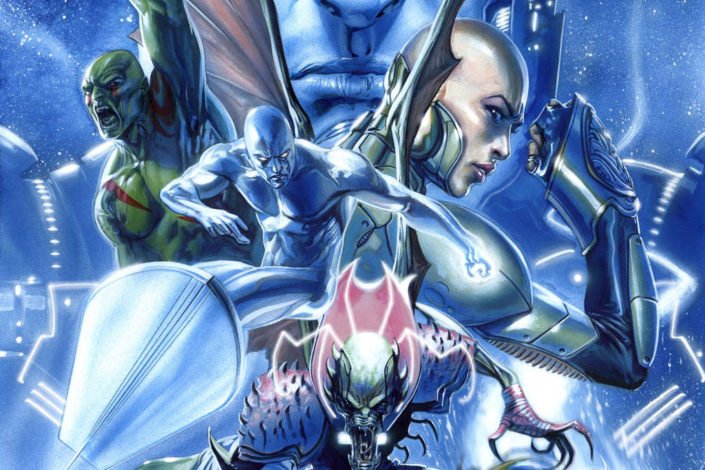
All of the “Annihilation” events are not created equal. In fact, it seems that “The Last Annihilation” is a minor event in comparison to the previous Annihilations, and it mostly involves the Guardians of the Galaxy written by Al Ewing with art by Juan Frigeri.

What is it about? Here is the official synopsis: The entire galaxy is under attack, the likes of which haven’t been seen since Annihilus first waged war. Now, five different planets are simultaneously under threat from a mysterious foe. This is what the new Guardians were built to do. But will it be too much? This summer… the war to end all wars begins. And not everyone’s going to come home.

What to read before The Last Annihilation?

The Last Annihilation being a cosmic event, you may also want to read the two previous events that had a considerable impact on the cosmic part of the Marvel Universe. First, there was Empyre (full reading order here), then we’ve got the King in Black event (full reading order here).

Al Ewing recently took over the Guardians of the Galaxy book. If you want to familiarize yourself with the new team, you can read the previous TPBs:

Read More »Marvel’s The Last Annihilation Reading Order (Guardians of the Galaxy)

Captain America by Ed Brubaker Reading Order: How to read the most celebrated adventures of Steve Rogers and the Winter Soldier

  • by

Everybody knows Captain America. But if you were in a coma for most of your life, he is a Marvel Comics Superhero and the alter ego of Steve Rogers, created in 1941 by Joe Simon and Jack Kirby.

As a young man, Steve wanted to fight for his country against the Nazis, but couldn’t … until he participated in an experiment that transformed him into a super-soldier. Near the end of the war, he and his sidekick Busty were left for dead. Trapped in ice and saved by the serum that changed him, he later came back to fight evil everywhere.

In January 2005, Ed Brubaker started to write the Captain America ongoing comics with the fifth volume. The Criminal author wrote 100 issues (with art by Steve Epting), bringing back Bucky as the Winter Soldier, dealing with Cap’s death and resurrection, and more including the death and life of his greatest enemy, the Red Skull, and the emergences of a new threat, General Aleksander Lukin, the head of one of the most powerful corporations in the world!

It’s the most celebrated run on the Captain America modern series.

Read More »Captain America by Ed Brubaker Reading Order: How to read the most celebrated adventures of Steve Rogers and the Winter Soldier

Bruce Wayne: Murderer/Fugitive Reading Order

  • by

Bruce Wayne: Murderer/Fugitive Reading Order

In the middle of the Post-Crisis era, The end of the 1990s was quite exhausting for Batman with the “No Man’s Land” storyline during which Gotham City was ravaged by a large earthquake. Now, Ed Brubaker and Greg Rucka started to write for the main Batman series and they put Bruce Wayne on the run in a two-part storyline called Bruce Wayne: Murderer? and Bruce Wayne: Fugitive.

Here is the official synopsis: After being found with the dead body of Vesper Fairchild in his arms, Bruce Wayne is arrested for her murder. Looking to prove Bruce’s innocence, Nightwing, Robin, and Batgirl quickly begin an investigation to discover the true killer. But as the mystery unfolds, evidence of Bruce’s guilt mounts, and even his closest allies begin to question their mentor’s innocence. Tired of portraying himself as someone he is not and further embracing the freedom of his masked identity, Bruce decides to lay his millionaire playboy alter ego to rest and live life only as the Batman.

What to read before Bruce Wayne: Murderer?

After the No Man’s Land story-arc, Greg Rucka and Ed Brubaker started to write Detective Comics/Batman stories, leading to this two-part crossover event. It was the New Gotham era. You don’t need to read them to understand the Murderer/Fugitive story, of course, but it’s still

Read More »Bruce Wayne: Murderer/Fugitive Reading Order