Skip to content

Fabien

Co-founder of Comic Book Treasury, your Hellboy Specialist and the man behind the Batman Modern Age and the Amazing Spider-Man Guides.

Swamp Thing Reading Order

  • by

There is more than one Swamp Thing, the swamp monster/Elemental of the DC Universe (not Marvel’s Man Thing). The first one was created by Len Wein and Bernie Wrightson in House of Secrets #92 (July 1971) in a stand-alone horror story.

At first, the Swamp Thing was an anthropomorphic mound of vegetable matter fighting to protect his swamp home, but he eventually broadens his scope to protect the environment in general, and humanity from various supernatural or terrorist threats, becoming a DC Superhero in his own way. 

During the 1970s, Swamp Thing had his first ongoing series, but it didn’t last. When he became the star of a Wes Craven movie in 1982, a second series was launched. It was almost canceled before Alan Moore became the main writer and made it a real creative success, rewriting the mythology of the character and expanding his powers and reach.

Since then, more writers worked on the titles and Swamp Thing even started fighting alongside other DC heroes.

Read More »Swamp Thing Reading Order

Catwoman Reading Order

  • by

Created by Bill Finger and Bob Kane, Catwoman is the name used by notorious Gotham City’s burglar Selina Kyle who’s known for loving cats and for using a bullwhip as a weapon. Originally, she was an adversary of Batman, but became some kind of antiheroine, and even an ally of the Dark Knight—and more on the romantic side.

Even if Catwoman made her first appearance in Batman #1 (1940) under the name “The Cat,” she had to go away for a time between September 1954 to November 1966 after losing the battle against the Comics Code Authority. She came back to commit more crimes in the pages of the DC Comics titles. But those stories are not part of the current continuity, so we will focus on what is called the “Modern Era” of DC Comics.

Like others like her, her origins are not clear, multiple authors revised them, but it is firmly established that Selina Kyle grew up on the streets of Gotham, and spent some time in an orphanage and a juvenile detention center. She was working as a dominatrix at some point (in Batman: Year One) before becoming a successful thief who likes to rob the rich and powerful men of Gotham.

Catwoman had her first solo ongoing series in 1993 and took part in the major events of that era. At one point, she fought with the Justice League and later completely reformed, but it was more complicated than a crisis of conscience. Talking about a Crisis, after Infinite Crisis (see reading order), Selina is no longer Catwoman. Holly Robinson took over for a short period of time. Later, Catwoman formed the Gotham City Sirens with Poison Ivy and Harley Quinn. At one point during the New 52 era, Eiko Hasigawa became Catwoman (and Selina was one of the Gotham City crime bosses). With Rebirth, Catwoman occupied a prominent role in the third volume of Batman, her relationship with Batman played a major role in the story.

Read More »Catwoman Reading Order

The Amazing Spider-Man by Dan Slott Reading Order

During the first Civil War event (full reading order), Peter Parker revealed his Spider-Man identity on live television. This leads to a tragedy and this knowledge was quickly erased from the world with the event of the story arc called “One More Day”.

This is when J. Michael Straczynski stopped being the main writer of The Amazing Spider-Man (see Spidey’s JMS reading order). When he left, Marvel decided to get Spider-Man back to basics. This means that Peter Parker and Mary Jane had never married, and he had no memory of being married to her. Also, Harry Osborn was alive again.

It was the beginning of “Brand New Day.” Marvel decided to alternate writers for The Amazing Spider-Man series. One of them was Dan Slott who became the sole writer at issue #648 (Jan. 2011), launching the Big Time storyline. It was the beginning of what became the longest run in Spidey’s history.

During that era, Slott created new characters, updated old ones, developed the Spider-Verse, gave us the Superior Spider-Man, and more. He only left the title in 2018, his final issue being #801. But he came back to write Spider-Man in 2022, introducing the Spider-Boy and developing a sequel to his Superior Spider-Man series.

What to read before Dan Slott’s Amazing Spider-Man?

Of course, you can check out our Spider-Man Reading Order that covers the adventures of Spidey from the start to today. But, as I was saying, Brand New Day marked the start of the rebooted Amazing Spider-Man, and Dan Slott was one of the writers, and you can start with that:

  • Spider-Man: Brand New Day Omnibus Vol. 1
    Collects Free Comic Book Day 2007 (Spider-Man), Amazing Spider-Man (1999) #546-583, Amazing Spider-Man Annual (2008) #1, Secret Invasion: Amazing Spider-Man #1-3, Presidents’ Day Celebration Digital Comic, Spider-Man: Fear Itself One-Shot (2009), Amazing Spider-Man: Extra! #2, Spider-Man: Swing Shift Director’s Cut One-Shot And Material From Amazing Spider-Man: Extra! #1.
  • Spider-Man: Brand New Day Omnibus Vol. 2 (coming soon)
    Collects TBA

The Previous Brand New Day Collection:

Read More »The Amazing Spider-Man by Dan Slott Reading Order

Batman Fear State Reading Order

DC Batman Fear State Reading Order

To conclude his run on Batman (see reading order), James Tynion IV planned an event named Fear State that will get us through the end of 2021. All of the Bat-Series are involved, so here is the guide.

Gotham City is on the brink of martial law as Batman fights a two-front battle! The Scarecrow is unleashing a devasting attack on the city while the Magistrate has made their move to invade! Gotham City is on the brink of a violent evolutionary path and the danger level to Batman and his allies reaching a fever pitch!

The Magistrate now has full support from the mayor to handle high-level law enforcement in Gotham and has branded the Dark Knight as Public Enemy #1. Batman must also contend with the return of the Scarecrow who pursues his own terrifying agenda as he takes this chaotic moment to launch his Fear State.

What to read before Batman Fear State?

Read More »Batman Fear State Reading Order

Paper Girls Comics, a Reading Guide for the Brian K. Vaughan series

  • by

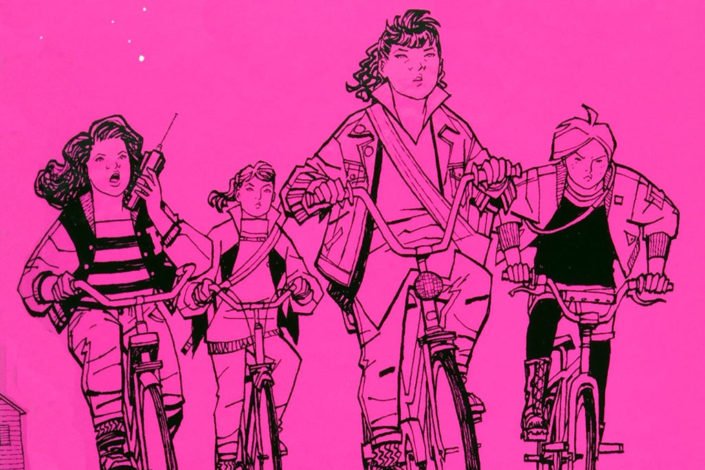
Paper Girls Reading Order

Following the success of The Boys, Amazon Prime tried to adapt another comic book but with more of Stranger Things vibe: Paper Girls! Unfortunately, the television adaptation didn’t find its audience and was canceled after one season of only eight episodes.

But before the television show, there was the comic book series and it was a pretty popular one! Paper Girls was written by Brian K. Vaughan and illustrated by Cliff Chiang—and published by Image Comics between October 2015 and July 2019. If you want to read it, there are multiple editions. Here is a guide to help you navigate all this.

First, what’s the story? Here is the official Paper Girls synopsis: In the early hours after Halloween of 1988, four 12-year-old newspaper delivery girls uncover the most important story of all time. Suburban drama and otherworldly mysteries collide in this smash-hit series about nostalgia, first jobs, and the last days of childhood.

Read More »Paper Girls Comics, a Reading Guide for the Brian K. Vaughan series

Batman No Man’s Land Reading Order

Batman No Man's Land Reading Order

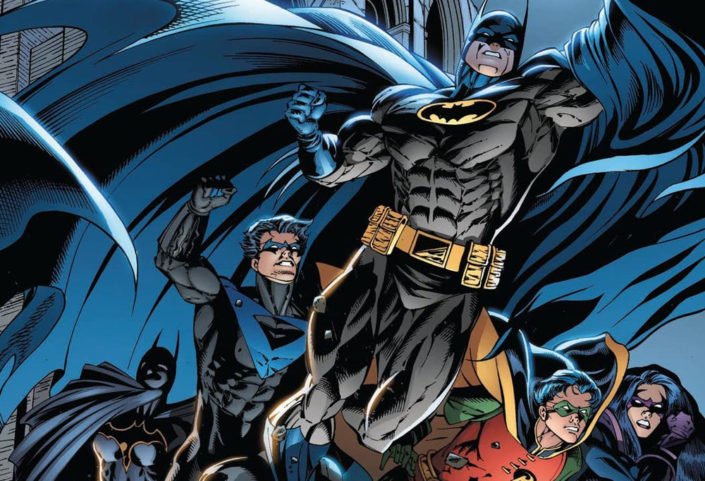
During the Post-crisis era, the end of the 1990s was full of disasters for Batman and Gotham City. We got Batman Knightfall (full reading order here), then Batman: Contagion, and its follow-up Batman: Legacy. After that, there was the Batman: Cataclysm crossover event that lead right to Batman No Man’s Land. The title alone is full of promises.

If you are unfamiliar with the story, here is the official synopsis: After suffering a cataclysmic earthquake, the U.S. government has deemed Gotham City uninhabitable and ordered all citizens to leave. It is now months later and those who have refused to vacate “No Man’s Land” live amidst a citywide turf war in which the strongest prey on the weak. Batman and his allies including the enigmatic new Batgirl, Nightwing, Oracle, and Robin must fight to save Gotham during its darkest hour and return Justice to the destroyed city.

Note: Cassandra Cain was introduced during this event. She became the official Batgirl after that. For more about her, go to Cassandra Cain Reading Order.

What to read before Batman No Man’s Land?

As I wrote at the beginning of this article, there was one disaster after the other—the one you need to read before Batman No Man’s Land is Batman: Cataclysm. You can find it in a dedicated TPB. But reading Cataclysm is not imperative (even if it’s recommended), most of the stories leading to (and explaining) the event are collected in what DC Comics called Batman: Road to No Man’s Land, as you’ll see below in the full reading order.

Read More »Batman No Man’s Land Reading Order

World War Hulk Reading Order, a Smashing Marvel Event

Published by Marvel Comics in 2007, and written by Greg Pak at the end of his run on the character Hulk with art by John Romita, Jr., World War Hulk rapidly became one of the most famous crossover storylines about the green monster.

Here is the official synopsis: Hulk versus the world, in an epic story of anger unbound! Exiled by his so-called friends, the Hulk has raged, bled, and conquered on the alien planet Sakaar. Now, he returns to Earth to wreak terrible vengeance on Iron Man, Mr. Fantastic, Doctor Strange, and Black Bolt—and anyone else who gets in the way! Madder than ever, stronger than ever, and accompanied by his monstrous Warbound allies, this time the Hulk may just tear this stupid planet in half!

What to read before World War Hulk?

When people talk about World War Hulk, they often include Planet Hulk in the package, but it’s a different storyline. Planet Hulk is where the story really begins. It’s not completely indispensable, but it’s still recommended to read it before going into World War Hulk. For more information, I refer you to our main Hulk Reading Order.

  • Hulk: Planet Hulk Omnibus
    Collects Fantastic Four (1998) #533-535, Incredible Hulk (2000) #88-105, Giant-Size Hulk (2006) #1, What If? Planet Hulk, Planet Hulk: Gladiator Guidebook And Material From New Avengers: Illuminati (2006) #1 And Amazing Fantasy (2004) #15.

Read More »World War Hulk Reading Order, a Smashing Marvel Event

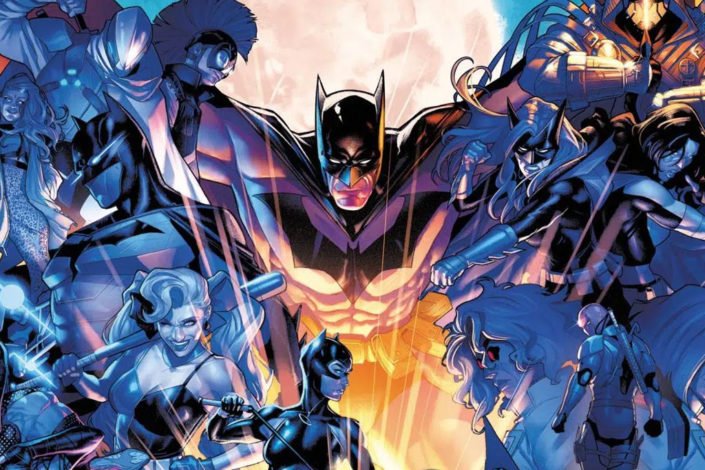
Batman by James Tynion Reading Order

  • by

After a divisive 85-issue run on the main Batman comics, Tom King stopped writing the series and James Tynion IV took over the book. Initially, it was announced it was just there to take the series to its 100 issues. Plans changed.

Finally, Tynion stayed, until he surprised everybody when he revealed he was leaving Batman for writing newly created-owned (non-DC) titles. His run on the Batman comics was not without events and, even if it’s not the longest, you may need a few pointers.

But first, here is the official synopsis of the story when James Tynion IV started writing the Batman series: It’s a new day in Gotham. Bane has been vanquished, but both the city and its champion are still struggling to pick up the pieces. Deathstroke, the world’s greatest mercenary, is back in town under a new contract. Soon other hired killers follow, and Batman is surrounded by assassins—as well as Gotham’s own dangerous players, from the Riddler to the Penguin to Harley Quinn.

As the Caped Crusader draws closer to uncovering the figure pulling the strings, the love of his life, Catwoman, holds the sinister secret in her claws. Can Batman pry it from her without tearing their relationship apart? And will it be enough to stop the coming plot against him?

Like a lot of writers on Batman comics, James Tynion IV worked with a lot of established characters but also introduced some of his own creations like Punchline, Ghost-Maker, Clownhunter, and more. 

What to read before Batman by James Tynion?

First, James Tynion IV wrote Detective Comics at the beginning of the Batman Rebirth era–following the Batman Modern Age era and The Batman New 52 era. It’s not an obligatory read before going into his Batman comic book run, but if you are curious:

Being that James Tynion IV picked up where Tom King left off, even if it is sold as a “new start” that you can presumably read without prior knowledge, you may want to read the last King’s storyline: City of Bane.

Read More »Batman by James Tynion Reading Order

Hulk Reading Order (Peter David, Immortal Hulk, and more…)

  • by

In 1962, Marvel Comics made a pivot that would change pop culture forever. They ended the long-running series Teen-Age Romance with issue #86, replacing it with something far more volatile: The Incredible Hulk #1.

Created by the legendary duo Stan Lee and Jack Kirby, the Hulk was a direct commentary on the Cold War arms race. The story introduces us to Dr. Bruce Banner, a brilliant but reserved scientist who designed the devastating G-bomb (Gamma bomb). While Banner was cautious, the aggressive General “Thunderbolt” Ross pushed for immediate testing—a decision that would have permanent consequences.

During the experimental detonation, a teenager named Rick Jones wandered onto the test site. In a selfless act of heroism, Banner shoved the boy into a protective trench but was caught in the full force of the gamma blast. Instead of dying from the lethal dose of radiation, Banner’s biology was rewritten. He became the “Jekyll and Hyde” of the Marvel Universe: two distinct entities trapped in one body. Bruce Banner is the mild-mannered, bespectacled physicist. The Hulk is the gray-skinned (later green) behemoth fueled by rage and loss of control.

Bound by guilt and loyalty, Rick Jones became Banner’s closest confidant, helping him navigate his new life as a misunderstood monster-turned-superhero.

If you want to dive deeper into the Hulk’s origin story and his evolution through the decades, check out our comprehensive guide on the story of the Hulk, his creation, and a lot more. To understand the complex web of allies and enemies surrounding the Jade Giant, don’t miss our breakdown of The Hulk Family Tree.

Read More »Hulk Reading Order (Peter David, Immortal Hulk, and more…)

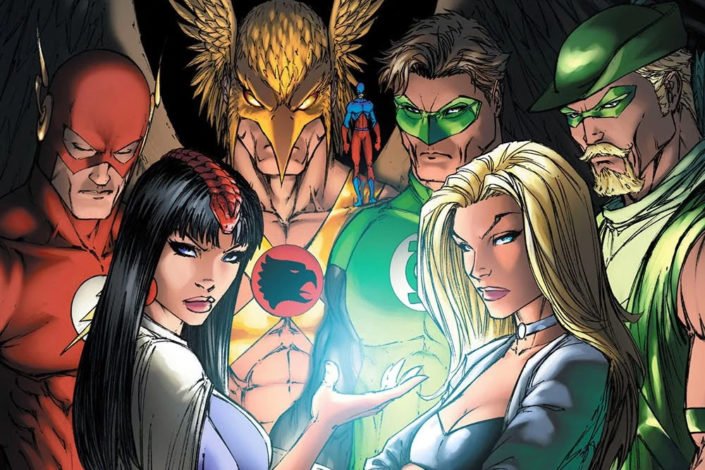
Justice League International Reading Order, by Keith Giffen and J. M. DeMatteis

After what is known as the Justice League Detroit era (or the Detroit League), the crossovers event Crisis on Infinite Earths and Legends, came a new kind of Justice League team. Written by Keith Giffen and J. M. DeMatteis, with art by Kevin Maguire, the Justice League International (JLI) Comics was created in 1987. It was not a team of A-listers. As a matter of fact, it was considered as a joke and–with what they got to work with–Giffen and DeMatteis developed a sitcom-like version of the Justice League. One that is still quite unique to this day.

With most of the usual big Justice League characters unavailable, this new league introduced new characterizations to old characters like Guy Gardner (Green Lantern) and Booster Gold, but also a major new character named Maxwell Lord who was behind the creation of this new league. They fight alongside (and with) Batman, The Black Canary, The Blue Beetle, Captain Atom, Doctor Fate, Doctor Light, The Martian Manhunter, Mister Miracle, Big Barda, Green Flame, Ice Maiden, Rocket Red, and more.

But here is the official synopsis from DC Comics: The world’s greatest super-team, the Justice League, are Earth’s greatest and last line of defense against all manner of world-threatening villains… assuming they don’t wipe each other out first! Find out what happens when Batman, Superman and the rest of the gang face a galactic invasion fleet known as the Cluster, exchange harsh words with crazed bounty hunter Lobo and track Mister Miracle back to the hell planet that is Apokolips, and then battle yet another invasion fleet…because that’s how they roll.

Read More »Justice League International Reading Order, by Keith Giffen and J. M. DeMatteis